
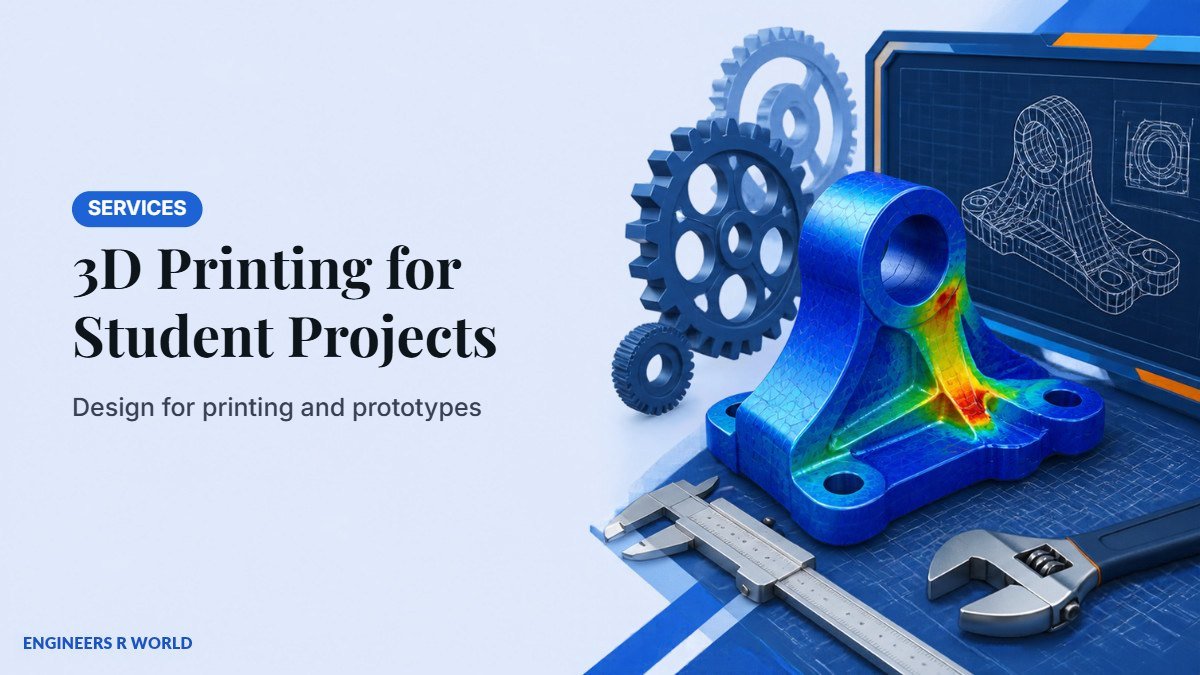
Quick answer: We help engineering students turn CAD models into physical prototypes. We check your SolidWorks or CAD model for printability, prepare the STL with correct wall thickness, tolerances and supports, and arrange printing in common materials such as PLA, PETG or resin. We also guide 3D printing-based projects such as lattice structures and topology-optimised parts.
Who This Is For
- Final year students who need a prototype or scale model for their project
- Students doing additive manufacturing or 3D printing research projects
- Project teams preparing models for exhibitions and expos
What You Get
- Design-for-3D-printing check: wall thickness, overhangs, tolerances for fits
- STL/3MF export and slicing guidance
- Prototype printing arranged in suitable material
- Guidance on 3D printing project topics and reporting results
- Support for comparing printed parts with simulation (e.g., lattice vs solid)
Common Materials for Student Prototypes
| Material | Good for |
|---|---|
| PLA | Display models, low-load parts, quick prototypes |
| PETG | Tougher functional parts, better heat and impact resistance than PLA |
| Resin (SLA) | Fine detail, small precise parts |
How It Works
- Send your CAD file or idea with size and purpose
- We check printability and suggest changes
- Confirm material, size and timeline
- Printing and delivery or pickup is arranged
Why Engineers R World
- Supporting engineering students since 2013 – 1000+ students in 7+ countries
- Mechanical, automobile and aerospace specialists with hands-on SolidWorks and ANSYS experience
- Clear communication on WhatsApp and live sessions
- Focus on helping you understand and present your own work
Related Resources
Frequently Asked Questions
Can you print my SolidWorks model?
Yes. Send the part file or STEP/STL; we check printability and prepare it for printing.
Which material should I choose?
PLA for display models and quick prototypes, PETG for tougher functional parts, and resin for small detailed parts.
Can a 3D printed part be my final year project?
Yes, when it includes design, analysis or testing – for example comparing lattice and solid parts for weight and strength.
Get Started
Share your details through the enquiry form on our home page or WhatsApp us at +91-8919741799. We reply with the next steps.