
Reciprocating compressors use a piston moving in a cylinder to compress gas, and they are used in refrigeration, air conditioning, refineries, gas pipelines and workshop air systems. Every compression stroke depends on the suction and discharge valves opening and closing at the right time. The valve plate sits between the cylinder and the valve chambers and carries the gas passages. It sees cyclic pressure on every stroke, so cracking and wear of valve plates are among the most common causes of compressor failure and loss of efficiency. This project designs and compares five valve plate designs.
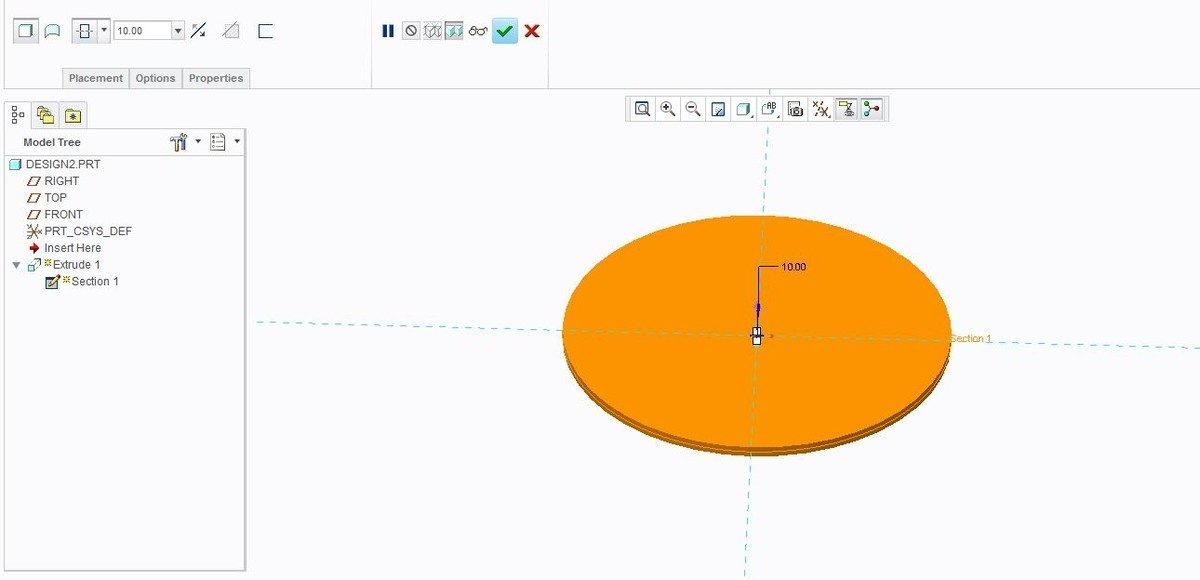
Compressor Valves and Valve Plates
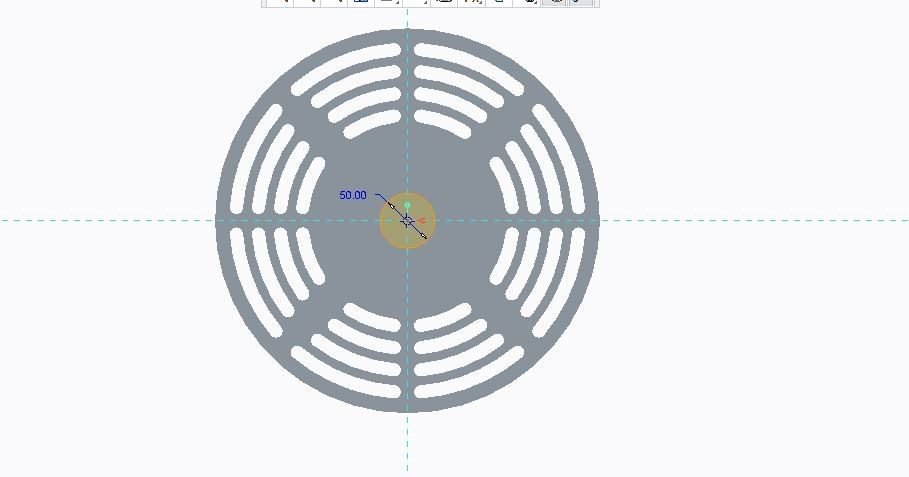
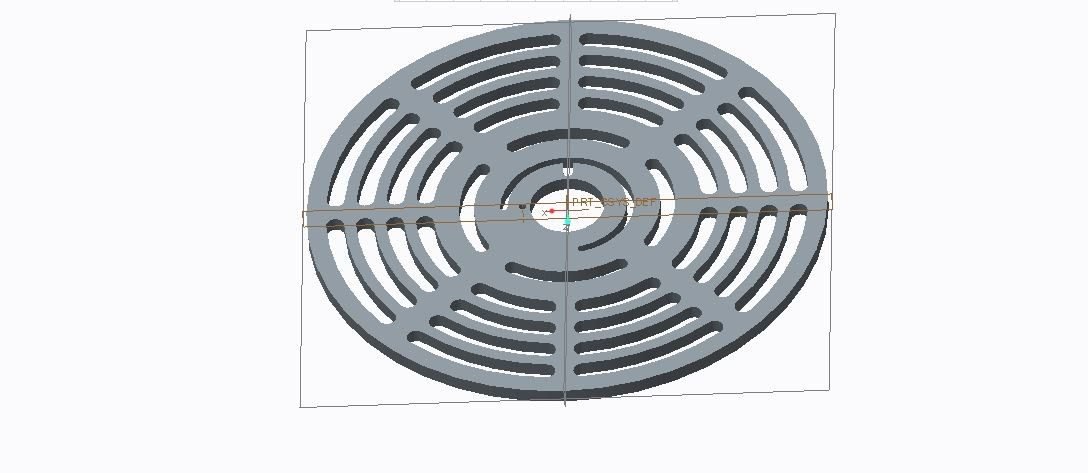
Common compressor valve types include plate valves, ring valves, concentric ring valves and poppet valves. Ring-type valves use concentric slots for gas flow, separated by ribs that hold the plate together. The number, width and arrangement of the slots and ribs decide how freely gas flows and how strong the plate is. Better slot layouts can reduce stress concentrations and extend valve life.
About the Project
Five valve plate designs with different slot and rib arrangements are modelled in CAD. Each design is imported into FEA, fixed at its supports and loaded with a gas pressure of 0.0215 MPa (2.15 × 10⁻² MPa) on its face. A static structural analysis gives total deformation, equivalent stress and safety factor for every design, so the designs can be compared under identical conditions. The report describes stainless steel grade 416 as the valve plate material.
Software Used
- CAD: valve plate design and design variants
- FEA: static structural analysis
Analysis Results
Key Results (Preview)
| Design | Deformation (mm) | Stress (MPa) | Safety factor |
|---|---|---|---|
| Design 1 | 0.72178 | 163.83 | 1.526 |
| Design 2 | 0.71259 | 161.08 | 1.552 |
| Design 3 | 0.66735 | 151.57 | 1.6494 |
| Design 4 | 0.66529 | 144.04 | 1.7356 |
| Design 5 | 0.65628 | 143 | 1.7482 |
The step-by-step design changes steadily lower the deformation and stress and raise the safety factor. How each design was modified and which one is recommended are explained in our live class or recorded video for this project.
Real-World Applications
- Refrigeration and air conditioning: compressors in fridges, freezers and AC units.
- Workshop air compressors: supplying compressed air for tools and painting.
- Oil and gas: reciprocating gas compressors in refineries and pipelines.
- Automotive: brake air compressors in trucks and buses.
Key Concepts Covered
- Compressor operation: suction, compression and discharge strokes.
- Design iteration: improving a part through a series of controlled design changes.
- Stress concentration: how slots and ribs change stress in a plate.
Project Workflow
- Study reciprocating compressors and valve failure modes.
- Model the base valve plate.
- Create four improved slot and rib designs.
- Analyse all five designs at the same pressure.
- Compare and discuss the results in the report.
Why This Project Matters
Design optimisation through comparison is a key skill for design engineers. This project is a good final-year choice for mechanical and thermal engineering students interested in compressors and refrigeration.
Related Projects
Explore more design and analysis projects on similar topics:
- V6 Engine Design in CAD with Ceramic-Coated Piston Concept
- V6 Engine Camshaft Design and Analysis: Forged Steel vs Al-3003, EN-9 and Al-7475 (CAD and FEA)
- Two-Wheeler Piston and Connecting Rod: Static and Thermal Analysis with Design Optimisation
- Portable Grain Packing Machine Design and Analysis: Steel vs Grey Cast Iron vs Aluminium Alloy (CAD and FEA)
What Support You Get
- Design guidance: how to build the CAD model yourself – CAD part files of all five valve plate designs (with IGES files)
- Analysis guidance: how to set up and run the analysis yourself – FEA static structural analysis files for all five designs
- Report guidance: how to structure your own report – methodology, results and conclusion
- Live class: a step-by-step explanation of the method while you work on your own licensed software, so you can understand it and present your work confidently
Studying abroad? We guide you too – learn to build projects like this in our live classes, on your own licensed software.
Who Is This Project For?
This project is a good learning example for B.Tech and B.E. final year students, diploma students who want to learn design and analysis, and M.Tech students who want to learn a method they can extend in their own thesis. It is also useful for anyone who wants to learn reciprocating compressor valves, design iteration and static analysis in FEA on a real engineering problem instead of a textbook example.
Frequently Asked Questions
What does a compressor valve plate do?
It sits between the cylinder and the valve chambers and carries the gas passages controlled by the suction and discharge valves.
How many designs are compared?
Five valve plate designs with different slot and rib arrangements are compared.
What load is applied?
A gas pressure of 0.0215 MPa is applied on the plate face with the plate fixed at its supports.
Which software is used?
CAD is used for the designs and FEA for the static structural analysis.
Learn the Compressor Valve Plate Project With Us
Want to learn this project for your final year, mini project or M.Tech work? Message us with your university, branch and deadline, and we will share a learning plan – live classes and step-by-step guidance while you build it yourself.
Enquire about this project on WhatsApp or use the enquiry form on our home page. Browse more mechanical projects or 60+ mechanical engineering project ideas.
Interested in this project? Get the details, files and guidance from our team.
Enquire on WhatsApp