
An aircraft design project is one of the most common final year and lab projects for aeronautical and aerospace students. The report follows a fixed sequence: you start from the mission, estimate the weight, size the wing and engine, choose the airfoil, lay out the fuselage, tail and landing gear, and finally check performance and stability. This guide explains the aeronautical final year project report format chapter by chapter, gives a worked outline for a light aircraft, lists 25 aircraft design project ideas, and lets you download the full guide as a free PDF.
Quick answer: An aircraft design project report usually has these chapters: 1 Introduction and mission requirements, 2 Comparative study of similar aircraft, 3 Weight estimation, 4 Wing loading and thrust-to-weight ratio, 5 Airfoil and wing selection, 6 Fuselage, tail and landing gear layout, 7 Performance, 8 Stability, 9 V–n diagram and structural loads, 10 CAD model, conclusion and references. Every number must come from a stated equation, a similar aircraft or your own calculation – that traceability is what examiners check.
Download the Aircraft Design Project Report Guide (PDF)
Aircraft Design Project Report Format (Chapter-Wise)
| Chapter | What to include |
|---|---|
| Preliminary pages | Title page, certificate, declaration, acknowledgement, abstract, contents, lists of figures, tables and symbols |
| 1. Introduction and mission | Aircraft type, payload, range, cruise speed, cruise altitude, take-off and landing distance, mission profile diagram |
| 2. Comparative study | Table of 8–15 similar aircraft with weights, wing area, span, power or thrust, speed and range; graphs of key ratios |
| 3. Weight estimation | Take-off weight from empty-weight fraction and fuel fraction (mission segment method) |
| 4. Wing loading and T/W (or P/W) | Constraint diagram from stall, take-off, climb, cruise and landing; the chosen design point |
| 5. Airfoil and wing | Airfoil selection with reasons, wing area, span, aspect ratio, taper, sweep, dihedral, high-lift devices |
| 6. Fuselage, tail and landing gear | Fuselage length and cross-section, tail sizing with volume coefficients, landing gear position and tip-back angle |
| 7. Engine selection | Required power or thrust and the selected engine |
| 8. Performance | Drag polar, L/D max, range, endurance, rate of climb, ceiling, take-off and landing distance |
| 9. Stability | Centre of gravity, neutral point and static margin |
| 10. V–n diagram and loads | Manoeuvre and gust envelopes, limit and ultimate load factors |
| 11. CAD model and drawings | Three-view drawing and 3D model |
| 12. Conclusion and references | Final specification table, future scope, references in IEEE style |
Worked Outline: Conceptual Design of a 4-Seat Light Aircraft
This short example shows how the chapters connect. The numbers are illustrative only – in your report each one must be calculated from your own mission and data.
| Step | Example value | How it is obtained |
|---|---|---|
| Mission | 4 people + baggage, 900 km range, cruise 220 km/h at 2,500 m | Given requirement |
| Take-off weight (W0) | ≈ 1,100 kg | Empty-weight fraction from similar aircraft + fuel fraction from Breguet range |
| Wing loading (W/S) | ≈ 70 kg/m² | Limited by stall speed and landing distance |
| Wing area (S) | ≈ 16 m² | S = W0 / (W/S) |
| Aspect ratio and span | AR ≈ 7.5, b ≈ 11 m | From comparative study; b = √(AR·S) |
| Airfoil | NACA 2412 (or similar) | Good CL,max, gentle stall, data available |
| Power required | ≈ 130 kW | From the constraint diagram (climb and cruise) |
| Static margin | 10–15 % MAC | From CG and neutral point calculation |
| Limit load factor | +3.8 / −1.5 | Typical normal-category values for the V–n diagram |
Calculate the performance numbers with our Python examples – standard atmosphere, drag polar and Breguet range code.
25 Aircraft Design Project Ideas for Engineering Students
Complete aircraft (conceptual design)
- Two-seat trainer aircraft
- Four-seat light utility aircraft
- 19-seat commuter aircraft
- Short take-off and landing (STOL) bush plane
- Agricultural spraying aircraft
- Amphibious aircraft (seaplane)
- Regional turboprop (50–70 seats)
- Business jet
- Cargo aircraft
- Fire-fighting aircraft
- Electric two-seat trainer
- Solar-powered high-altitude UAV
UAV and drone design
- Fixed-wing surveillance UAV
- VTOL tilt-rotor UAV
- Medical-delivery drone
- Glider for a student competition
- Flying-wing (blended wing body) UAV
Component design and analysis
- Wing spar and rib structure (aluminium vs composite)
- Winglet design for induced-drag reduction
- Horizontal and vertical tail sizing and analysis
- Landing gear design and drop-load study
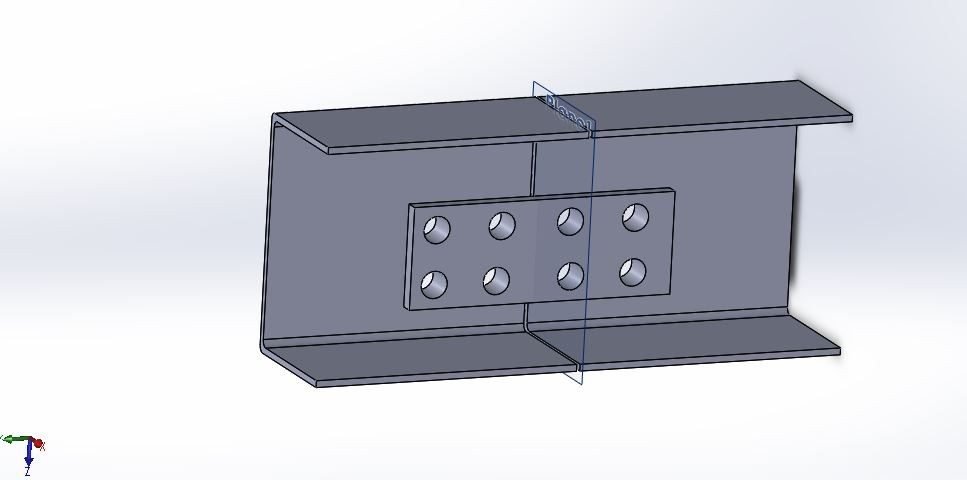
- Fuselage frame and splice joint analysis
- Aircraft windshield design
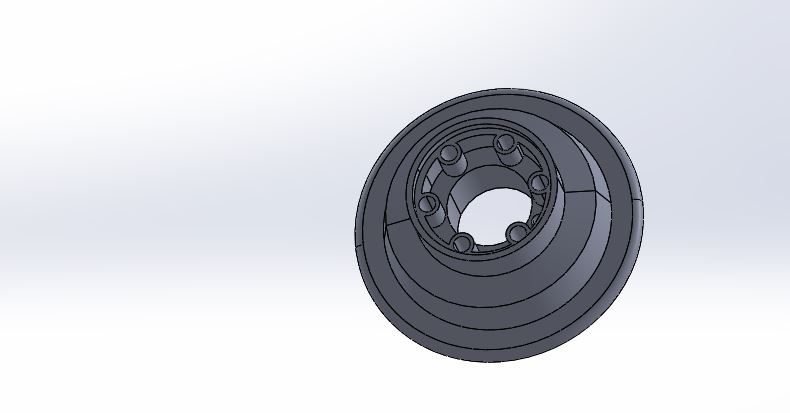
- Aircraft wheel hub and brake rotor
- Engine mount and firewall design
Aircraft Design Projects from Our Library






Common Mistakes in Aircraft Design Reports
- Numbers without a source. Every value needs an equation, a reference aircraft or a calculation.
- No iteration. Weight changes after you size the wing and engine – show at least one update loop.
- Copying a real aircraft’s data as your design. Use similar aircraft only for trends and starting values.
- Missing units and symbols. Add a nomenclature list and keep units consistent (SI preferred).
- Weak discussion. Explain why you chose each value, not just what it is.
Related Guides
- Engineering thesis example (free PDF)
- Project report format – chapter-wise guide
- Free report, thesis and PPT templates
- Aeronautical engineering projects for final year
- Flight mechanics viva questions and aircraft structures viva questions
Need Guidance With Your Project?
We guide and support your work – from choosing the topic and planning the method to explaining each step in live screen-share classes or recorded videos, so you do the modelling, analysis and writing yourself with confidence. Message us on WhatsApp or use the contact form on our home page and tell us your branch, year and the idea you like.
Frequently Asked Questions
What is the format of an aircraft design project report?
A typical aircraft design report has an introduction with mission requirements, a comparative study of similar aircraft, weight estimation, wing loading and thrust-to-weight selection, airfoil and wing design, fuselage, tail and landing gear layout, engine selection, performance, stability, a V–n diagram, a CAD model, conclusion and references.
Where can I get an aircraft design project report PDF?
You can download the free aircraft design project report guide on this page. It gives the chapter structure, a worked outline and a checklist. Use it to plan your own report and write it in your own words.
How do I start an aircraft design project?
Start by fixing the mission – payload, range, speed and runway length – then collect data for 8 to 15 similar aircraft. Use their trends to estimate the take-off weight, then size the wing and engine from a constraint diagram.
What are good aircraft design project ideas?
A two-seat trainer, a four-seat utility aircraft, a STOL bush plane, an agricultural aircraft, a fixed-wing surveillance UAV, a VTOL tilt-rotor UAV, a medical-delivery drone and component studies such as wing spars, winglets and landing gear are all good choices.
Which airfoil is used in aircraft design projects?
Light-aircraft projects often use NACA 2412, NACA 4412 or NACA 23012 because they have good maximum lift, gentle stall and plenty of published data. Always explain why your airfoil suits your mission.
How long is an aeronautical final year project report?
Usually 50 to 100 pages including figures and tables, but follow your university’s guidelines.
Studying abroad? We guide you too – learn Python and engineering through our live classes or recorded video lessons.