
A heat exchanger moves heat from one fluid to another without letting them mix. It is used in air conditioners, refrigerators, food processing plants, power stations and car radiators. A simple way to make a tube-type heat exchanger work better is to place an insert inside the tube. The insert narrows the flow path, speeds up the fluid near the wall and stirs the flow, which helps heat move between the fluid and the wall.
A second way to improve performance is to change the fluid itself. Nanofluids are ordinary base fluids with very fine solid particles, such as aluminium oxide or silicon carbide, mixed into them. These particles can raise the thermal conductivity of the fluid. This project combines both ideas and studies inserts of different shapes with several fluids using CFD.
Heat Exchanger and Insert Design in Creo
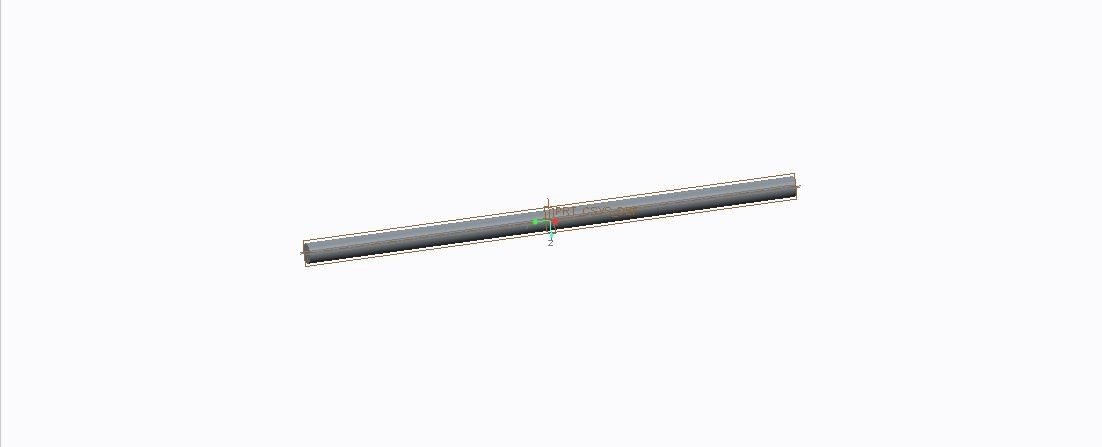
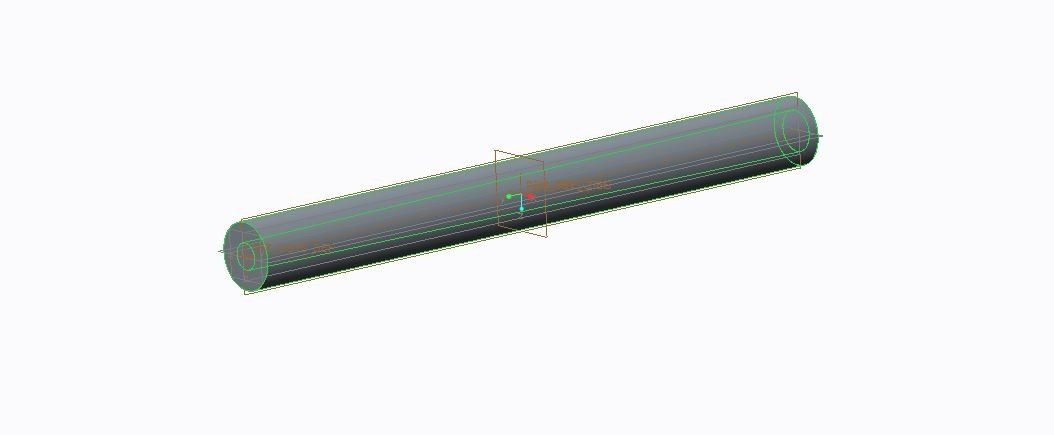
The heat exchanger tube was modelled in Creo 2.0 with a hole cut through its length. Two inserts were then designed and assembled inside it:
- Circular insert – a straight rod of 20 mm diameter running along the tube.
- Tapered insert – made with the blend option, changing from 20 mm to 30 mm diameter along its length.



Fluids Studied
Each insert design was analysed with four working fluids:
- Water
- Ethylene glycol
- Aluminium oxide (Al₂O₃) nanofluid
- Silicon carbide (SiC) nanofluid
CFD Setup and Boundary Conditions
The assembly was imported into ANSYS Workbench, the fluid region was meshed, and the flow was solved in Fluent. The same boundary conditions were used for every case:
| Boundary | Condition |
|---|---|
| Inlet | Velocity 0.1 m/s at 327 K |
| Outlet | Temperature 297 K |

Results Calculated
For both inserts and all four fluids, the CFD solution gives:
- Pressure on the walls
- Velocity distribution
- Total temperature distribution
- Eddy viscosity
- Turbulence kinetic energy


The contours show how the fluid speeds up around the insert and how the pressure falls along the tube. The full comparison of the circular and tapered inserts for each fluid, and the combination that gives the best result, is explained in the project report.
Why Inserts and Nanofluids Matter
Inserts are cheap and can be fitted into existing tubes, so they are a common retrofit for improving old heat exchangers. Their drawback is extra pressure drop, which means more pumping power. Nanofluids can carry more heat, but particles also raise viscosity. A CFD study like this one shows both sides together, so a designer can judge whether the gain in heat transfer is worth the extra flow resistance.
Reading the CFD Contours
Each contour uses colour to show how a quantity changes through the tube: red marks the highest values and blue the lowest. Comparing the velocity contours of the circular and tapered inserts shows where the flow speeds up as the gap narrows. The pressure contours show how much resistance each design adds, and the turbulence kinetic energy plots show how strongly the fluid is mixed near the wall.
Real-World Applications
- Shell-and-tube and double-pipe heat exchangers
- Air-conditioning and refrigeration coils
- Engine and electronics cooling loops using nanofluids
- Process heating and cooling in food and chemical plants
Related Projects
Explore more design and analysis projects on similar topics:
- CFD Analysis of Circular, Square and Triangular Corrugated Pipes at 278 K and 318 K
- Double Tube Heat Exchanger with Tapered Fins and Angled Plates: CFD with TiO₂ Nanofluid
- CFD Analysis of Three Heat Exchanger Designs: U-Tube, Zig-Zag and Helical Coil with Water and Al2O3 Nanofluid (ANSYS Fluent)
- Engine Cooling Fan Design and Analysis: Static, Modal and CFD
What You Get
- Design files: Creo models of a heat exchanger tube with circular and tapered inserts
- Analysis files: ANSYS Fluent CFD with four fluids (0.1 m/s inlet at 327 K)
- Project document: complete report with methodology, results and conclusion
- Class explanation: a session that explains what was done in the project, step by step, so you can understand and present it confidently
Who Is This Project For?
This project suits B.Tech and B.E. final year students, diploma students looking for a strong design and analysis project, and M.Tech students who need a base model they can extend for their thesis. It is also useful for anyone who wants to learn How insert shape and nanofluids change pressure, velocity and turbulence in a heat exchanger on a real engineering problem instead of a textbook example.
Frequently Asked Questions
What inserts are studied?
A 20 mm circular insert and a tapered insert that changes from 20 mm to 30 mm diameter.
Which fluids are used?
Water, ethylene glycol, aluminium oxide (Al₂O₃) nanofluid and silicon carbide (SiC) nanofluid.
What boundary conditions are applied?
An inlet velocity of 0.1 m/s at 327 K and an outlet temperature of 297 K.
Which insert and fluid work best?
The full comparison and the best combination are explained in the project report.
Get the Heat Exchanger Insert Project
Want this project for your final year, mini project or M.Tech work? Message us with your university, branch and deadline, and we will share the exact scope, files and report format.
Enquire about this project on WhatsApp or use the enquiry form on our home page. Browse more mechanical projects or 60+ mechanical engineering project ideas.
Interested in this project? Get the details, files and guidance from our team.
Enquire on WhatsApp