
A good mini project for mechanical engineering 2nd year or 3rd year should match what you are studying in that year. In the 2nd year you learn drawing, materials, strength of materials and thermodynamics, so your project should be simple and based on one principle. In the 3rd year you study theory of machines, machine design, heat transfer and manufacturing, so you can take on a mechanism with design calculations or a small analysis. This page gives 45 year-wise mini project ideas, each linked to the subject it uses, so you can pick a topic that is easy to explain in the viva.
Quick answer: For the 2nd year, choose a one-principle model such as a hydraulic jack model, a foot step power generator, a mini belt conveyor, a pulley lifting system or a beam deflection calculator in Python. For the 3rd year, choose a project with design calculations, such as a gear transfer mechanism, a pneumatic vice, a scissor jack, a quick-return mechanism or a fin heat-transfer study. Keep the cost low with standard parts, and add one calculation or analysis to get better marks.
2nd Year vs 3rd Year Mini Project – What Is Expected?
| Point | 2nd year mini project | 3rd year mini project |
|---|---|---|
| Subjects you can use | Engineering drawing, materials, strength of materials, thermodynamics, fluid mechanics | Theory of machines, machine design, heat transfer, manufacturing, metrology, CAD |
| Level | One principle, working model or simple study | Mechanism with design calculations, or a small analysis |
| Team size | 2–4 students | 2–4 students |
| Report | 10–25 pages: aim, principle, parts, working, result | 25–45 pages: adds literature, calculations, drawings and testing |
| Best type | Working model or Python calculator | Model + calculation, or CAD + FEA/CFD study |
Mini Projects for Mechanical Engineering 2nd Year (20 Ideas)
These ideas need only first- and second-year concepts. Most can be built in a few weeks with a small budget, and each one has one clear principle that you can explain in two minutes.
Based on Strength of Materials and Mechanics
- Hydraulic jack model using syringes – shows Pascal’s law and mechanical advantage with plastic syringes and tubes.
- Truss bridge model and load test – build a bridge from ice-cream sticks or MS strips and compare the failure load with your hand calculation.
- Beam deflection test rig – measure deflection with a dial gauge for different loads and compare with the formula.
- Pulley block lifting system – compare the effort needed with one, two and four pulleys.
- Spring stiffness tester – find the spring constant of different springs and check Hooke’s law.
- Crane hook stress study – calculate the stress in a curved crane hook and compare materials.
Based on Thermodynamics and Fluid Mechanics
- Mini water turbine model – a small Pelton-type wheel driven by tap water lights an LED.
- Solar water heater model – a black absorber box with copper or aluminium tubes; measure the temperature rise.
- Venturi meter / orifice meter model – measure the flow rate from the pressure difference using a transparent tube setup.
- Evaporative cooler (desert cooler) model – a small fan and wet pad; record the temperature drop.
- Stirling engine model – a low-temperature engine that runs on a cup of hot water.
- Siphon and Bernoulli demonstration kit – simple, clear and easy to explain in the viva.
Simple Working Models
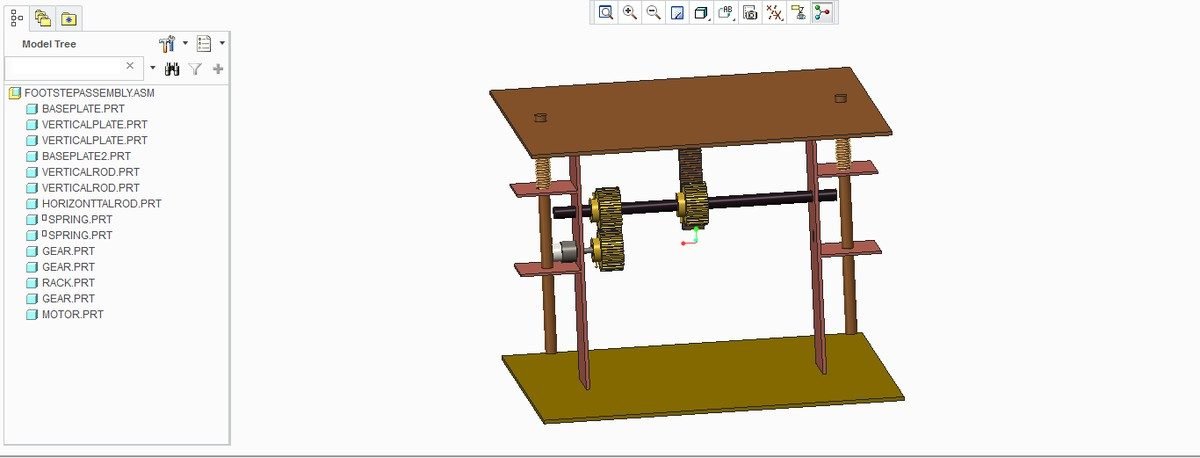
- Foot step power generation – a rack and pinion turns a small dynamo when someone steps on the plate.
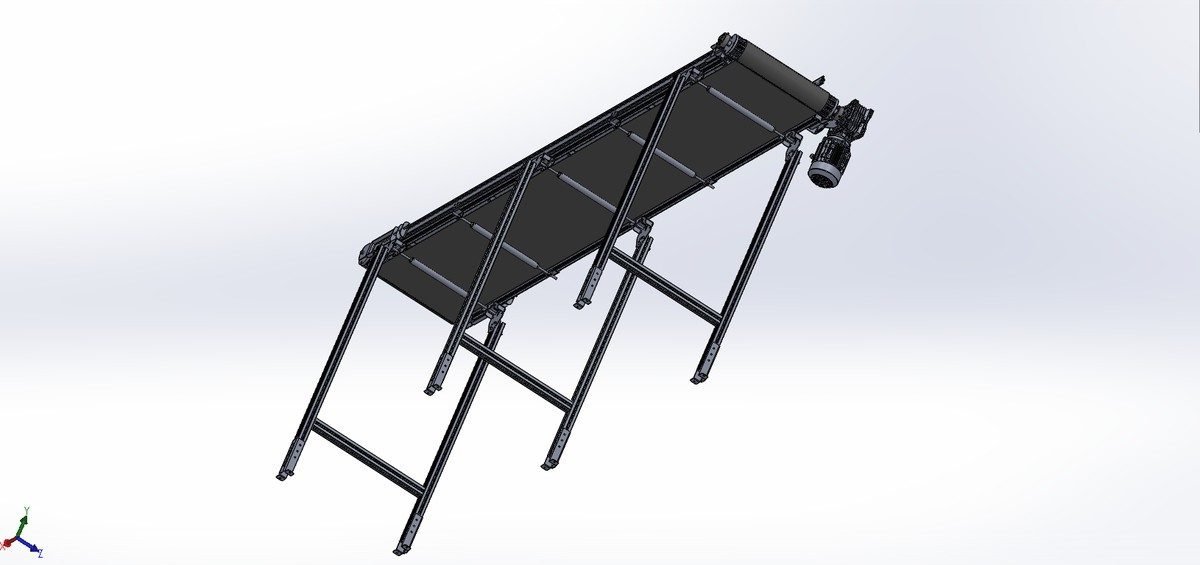
- Mini belt conveyor – rollers, a rubber belt and a geared motor; calculate the belt speed and load.
- Can crusher – a lever-based crusher that reduces can volume; calculate the mechanical advantage.
- Manual paper or plastic shredder – a pair of cutters driven by a hand crank.
- Air-powered car – a small car driven by a balloon or compressed-air bottle; study thrust and distance.
Software-Only Projects (No Material Cost)
- Beam deflection calculator in Python – plot the deflection curve for different loads and materials – see our beam deflection in Python example.
- Otto vs Diesel cycle efficiency plotter – compare efficiency at different compression ratios – see Otto vs Diesel cycle in Python.
- 3D model and assembly drawing of a machine part – model a screw jack, knuckle joint or flange coupling and prepare its detailed drawings.
Mini Projects for Mechanical Engineering 3rd Year (25 Ideas)
In the 3rd year, examiners expect more than a working model. Add design calculations from Machine Design, a mechanism analysis from Theory of Machines, or a simple FEA or CFD study.
Based on Theory of Machines (Mechanisms)
- Gear transfer mechanism – transmits motion at 90° using a set of gears; calculate the gear ratio and tooth load.
- Quick-return mechanism model – the slotted-lever mechanism of a shaper; measure the cutting-to-return time ratio.
- Geneva mechanism for indexing – turns continuous rotation into step-by-step motion, used in packing machines.
- Chainless bicycle with bevel gears – a shaft drive replaces the chain; design the bevel gears and shaft.
- Cam and follower test rig – compare displacement profiles of different cams.
- Four-bar linkage based wiper or walking mechanism – a clear demonstration of linkage kinematics.
Based on Machine Design
- Scissor jack design – design the power screw, check the self-locking condition and calculate the efficiency.
- Pneumatic vice – a pneumatic cylinder clamps the job; calculate the clamping force from the air pressure.
- Flange coupling design and analysis – design the bolts and hub and check the stress in two or three materials.
- Riveted lap joint design – calculate the shearing, tearing and crushing strength and compare steel and aluminium plates.
- Helical spring design for a two-wheeler suspension – design the spring and compare materials.
- Shaft design under combined bending and torsion – a classic design problem; confirm the result with FEA.
- Bicycle wheel rim analysis – compare steel, aluminium and magnesium alloy rims for stress and weight.
Based on Heat Transfer
- Plate fin heat sink study – compare fin heights or spacing for an electronic heat sink.
- Annular vs longitudinal fins – compare heat loss with and without perforations.
- Double-pipe heat exchanger (parallel vs counter flow) – measure the outlet temperatures and calculate the LMTD.
- Insulated lunch box or thermal flask study – compare insulation materials for heat loss over time.
Based on Manufacturing and Automation
- Automatic hammering machine – a cam or crank drives a hammer at a fixed rate for small forming jobs.
- Pipe bending machine – a manual or motorised bender with a former and roller.
- Pneumatic punching machine – punch holes in thin sheets using compressed air.
- Mini lathe or drilling attachment – a small attachment for wood or soft metals.
- Pick-and-place arm with servo motors – a basic robotic arm for light objects.
- Spur gear stress calculator in Python – use the Lewis and Hertz equations – see spur gear design in Python.
Mini Projects from Our Library You Can Learn From
Open any of these to see how a simple concept is turned into a full design-and-analysis project with a 3D model, materials and results.


How to Choose Your Mini Project in 5 Steps
- Start from a subject you like. If you enjoy Theory of Machines, pick a mechanism; if you like Heat Transfer, pick a fin or heat-exchanger study.
- Check your budget and time. A working model needs parts and workshop time; a design-and-analysis or Python project needs only a computer.
- Keep one clear principle. Examiners ask “what is the working principle?” first – make sure the answer is one sentence.
- Add one number. A calculated gear ratio, efficiency, stress or temperature drop makes the project look like engineering, not just a model.
- Plan the report early. Use our project report format and free report and PPT templates.
Common Viva Questions for 2nd and 3rd Year Mini Projects
- What is the working principle of your project?
- Why did you choose this material?
- What is the mechanical advantage / gear ratio / efficiency?
- What are the limitations, and how would you improve it?
- Where is this used in industry?
Practise with our project viva questions, theory of machines viva questions and machine design viva questions.
More Project Ideas
- 55 simple, low-cost mini projects for mechanical students
- Mechanical engineering projects in agriculture
- Easy final year projects for mechanical engineering
- Mechanical projects for diploma students
- Python for mechanical engineers
Need Guidance With Your Project?
We guide and support your work – from choosing the topic and planning the method to explaining each step in live screen-share classes or recorded videos, so you do the modelling, analysis and writing yourself with confidence. Message us on WhatsApp or use the contact form on our home page and tell us your branch, year and the idea you like.
Frequently Asked Questions
Which mini project is best for mechanical engineering 2nd year?
A project based on one principle works best in the 2nd year – for example a hydraulic jack model, foot step power generation, a mini belt conveyor, a pulley lifting system or a beam deflection calculator in Python. They use concepts from strength of materials, thermodynamics and fluid mechanics that you are already studying.
Which mini project is best for mechanical engineering 3rd year?
In the 3rd year, choose a project with design calculations or a small analysis, such as a gear transfer mechanism, scissor jack, pneumatic vice, quick-return mechanism, flange coupling design or a fin heat-transfer study.
What is the difference between a 2nd year and a 3rd year mini project?
A 2nd year mini project is usually a simple model or study based on one principle. A 3rd year mini project is expected to include design calculations from machine design or theory of machines, or a basic FEA or CFD study, along with a longer report.
Can I do a mini project only on the computer?
Yes. CAD modelling with FEA or CFD, or a Python calculator for beam deflection, gear stress or engine cycles, needs no material cost. Check with your guide whether your college accepts a software-only mini project.
How much does a mechanical mini project cost?
Most 2nd and 3rd year mini projects can be built at low cost using MS sections, bicycle parts, bearings and a small geared motor. Designing the model on the computer first helps you buy the right parts only once.
How long does a mini project take?
Usually 6 to 10 weeks within one semester, including the model, testing and report.
Studying abroad? We guide you too – learn Python and engineering through our live classes or recorded video lessons.