
Mini mechanical projects are small, low-cost projects that students can design, analyse or build in one semester. Below are simple mechanical project ideas we recommend for 3rd-year, minor and diploma projects, with the concept, the main parts and what you can analyse in each.
What makes a good mini mechanical project?
- Simple concept: one mechanism or one part you can explain in two minutes.
- Standard parts: gears, bearings, shafts, springs, MS pipes and sheets that are easy to buy locally.
- Clear output: it lifts, moves, cuts, separates or generates something you can show.
- Short time: can be finished in 6 to 10 weeks alongside regular classes.
- Analysis option: even a small project gets better marks with a basic stress check in ANSYS.
Low-cost mini mechanical project ideas
| Project | Main concept | What you can analyse |
|---|---|---|
| Scissor jack | Screw and linkage lifting | Stress in links and screw under load |
| Scissor lift | Hydraulic or screw-driven platform lift | Deflection of arms, factor of safety |
| Fork lift arm | Load handling arm | Bending stress in the fork |
| Belt conveyor | Material transfer by belt and rollers | Shaft and roller design, belt tension |
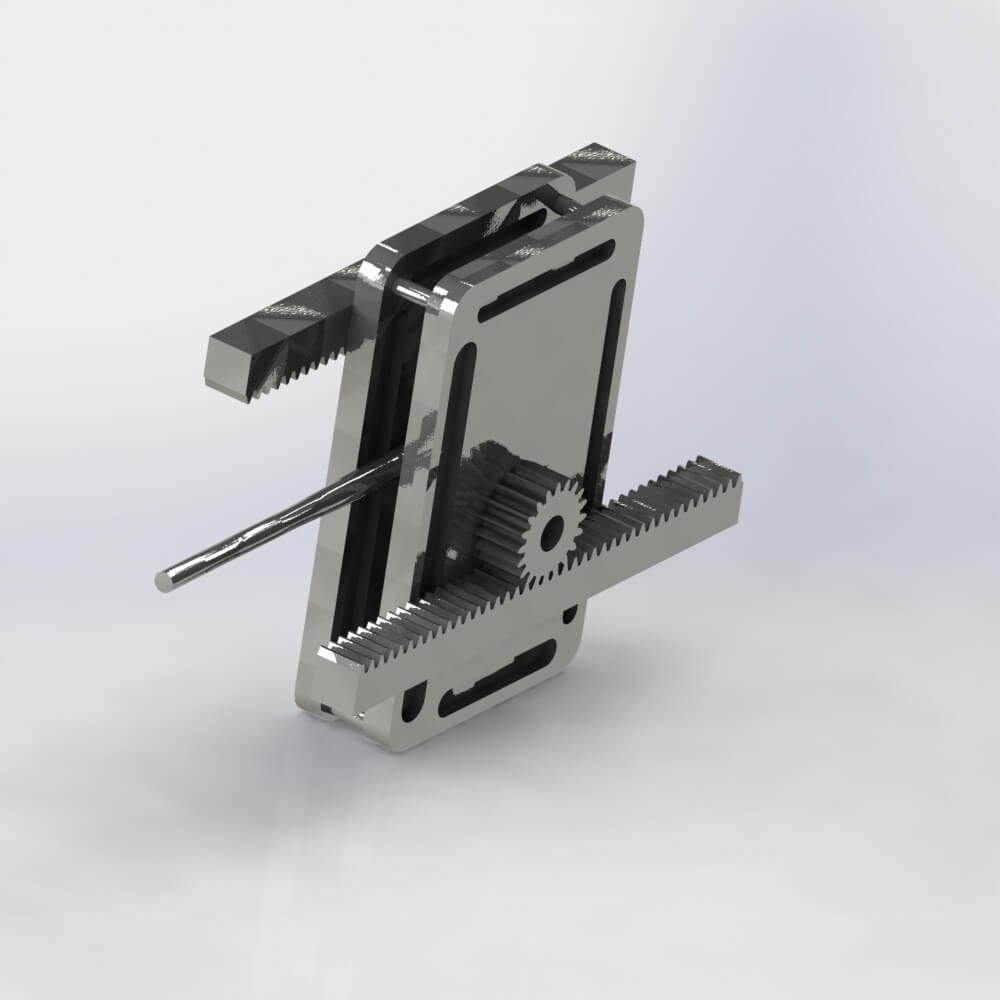
| Gear transfer mechanism | Power transmission with gears | Gear tooth stress, gear ratio |
| Foot step power generation | Converts walking force to electricity | Spring and plate deflection |
| Shock absorber power generation | Energy recovery from vehicle suspension | Spring stiffness, transient response |
| Electromagnetic braking system | Braking with magnetic force, no friction wear | Disc temperature and stress |
| Regenerative braking system | Stores braking energy | Flywheel or rotor stresses |
| Flywheel | Energy storage in a rotating mass | Stress at high speed, material comparison |
| Rice grain machine | Grain separating and cleaning | Frame strength, sieve design |
| Multipurpose agriculture machine | Ploughing, sowing and spraying in one unit | Frame and tool stress |
| Omni wheel | Movement in any direction | Roller and hub stress |
| 360-degree wheel rotation vehicle | Easy parking and turning | Steering linkage loads |
| Staircase climbing robot | Tri-star wheels to climb steps | Frame and wheel loads |
| Rocker bogie mechanism | Rover suspension used in Mars rovers | Link stresses on uneven ground |
| Fixture design | Holding parts accurately during machining | Clamping force, deformation |
| Die and punch | Sheet metal blanking | Punch stress and clearance |
How to keep a mini project low cost
- Choose a mechanism that uses standard parts instead of custom-machined parts.
- Build a scaled model instead of a full-size machine.
- Use mild steel or aluminium sections from local fabrication shops.
- Do the design and analysis on the computer first so you buy the right size parts only once.
- If fabrication is not required, choose a design-and-analysis mini project, which needs only software.
Mini project steps from idea to report
- Select the topic and write a one-line objective.
- Read 5 to 10 papers or articles on the topic (literature review).
- Make the 3D model in SolidWorks or CATIA.
- Do a basic analysis in ANSYS: static structural is enough for most mini projects. See our SolidWorks to ANSYS learning path.
- Build or simulate, record results and write the report. Follow the mechanical project report format.
Looking for bigger final year topics? See 100+ mechanical projects for students. Diploma students can also check mechanical projects for diploma students.
Want a mini project with CAD model, analysis and report ready? Engineers R World has supported 1000+ students since 2013. Send your enquiry from the home page form.
FAQs on mini mechanical projects
What is a mini project in mechanical engineering?
A mini project is a short project, usually in the 3rd year or 6th semester, where students design, analyse or build a simple mechanism or part to apply what they learned in theory.
Which mini project is easy for mechanical students?
Scissor jack, belt conveyor, foot step power generation and gear transfer mechanism are easy to understand, use standard parts and are simple to explain in the viva.
Can a mini project be only design and analysis?
Yes, many colleges accept a design-and-analysis mini project with a CAD model and ANSYS results. Confirm with your guide first.
How many students can do one mini project?
Usually a team of 2 to 4 students, depending on your college rules.