
Aerodynamics projects study how air flows around wings, bodies, blades and vehicles – and how to get more lift, less drag and better stability. They are among the most popular projects for aeronautical, aerospace and mechanical engineering students because they can be done in three ways: build and test (a small wind tunnel or a glider), simulate (CFD) or calculate (Python or hand theory). Below are 40 aerodynamics project ideas for students, from easy to advanced, with what each one teaches.
Quick answer: The best aerodynamics projects for students are NACA airfoil lift and drag study, winglet design for induced-drag reduction, a low-cost open-circuit wind tunnel, car body drag reduction, vortex generators for stall delay and a convergent–divergent nozzle study. Beginners can start with a smoke-flow visualisation box or a Python airfoil plotter; final year students can add CFD with mesh-independence and validation against published wind-tunnel data.
Top 10 Aerodynamics Projects at a Glance
| Project | What you learn | Method | Level |
|---|---|---|---|
| NACA airfoil lift and drag vs angle of attack | Lift curve, stall, pressure distribution | CFD / wind tunnel | Easy |
| Low-cost open-circuit wind tunnel | Contraction, test section, flow uniformity | Build | Medium |
| Smoke-flow visualisation box | Streamlines, separation, wake | Build | Easy |
| Winglet shapes and induced drag | Wing-tip vortices, span efficiency | CFD | Medium |
| Vortex generators on a wing | Boundary layer, stall delay | CFD | Medium |
| Car body drag reduction (spoiler, diffuser) | Pressure drag, wake control | CFD | Medium |
| Rocket nose cone shapes | Pressure drag at different Mach numbers | CFD | Medium |
| Convergent–divergent nozzle | Choked flow, shocks, Mach number | CFD / theory | Medium |
| Airfoil generator and lift calculator in Python | NACA equations, thin airfoil theory | Python | Easy |
| Leading-edge tubercles (whale-fin wing) | Bio-inspired stall control | CFD | Advanced |
1. Easy Aerodynamics Projects (Beginners and Mini Projects)
- Smoke-flow visualisation box – a small box with a fan, a honeycomb straightener and incense smoke shows how air flows around cylinders, airfoils and car models.
- Paper and balsa glider design – compare wing shapes and centre-of-gravity positions by measuring glide distance and glide ratio.
- Bernoulli and Venturi demonstration rig – measure pressure drop in a transparent venturi and compare with Bernoulli’s equation.
- Drag of everyday shapes – compare a sphere, a flat plate, a cylinder and a streamlined body using a simple drag balance.
- Kite design and stability – test different tail lengths and bridle positions for stable flight.
- Python NACA airfoil plotter – generate and plot any 4-digit NACA airfoil from its equations – a perfect software-only mini project.
- Paper helicopter (autorotation) study – measure fall time for different blade lengths and explain autorotation.
2. Airfoil and Wing Projects
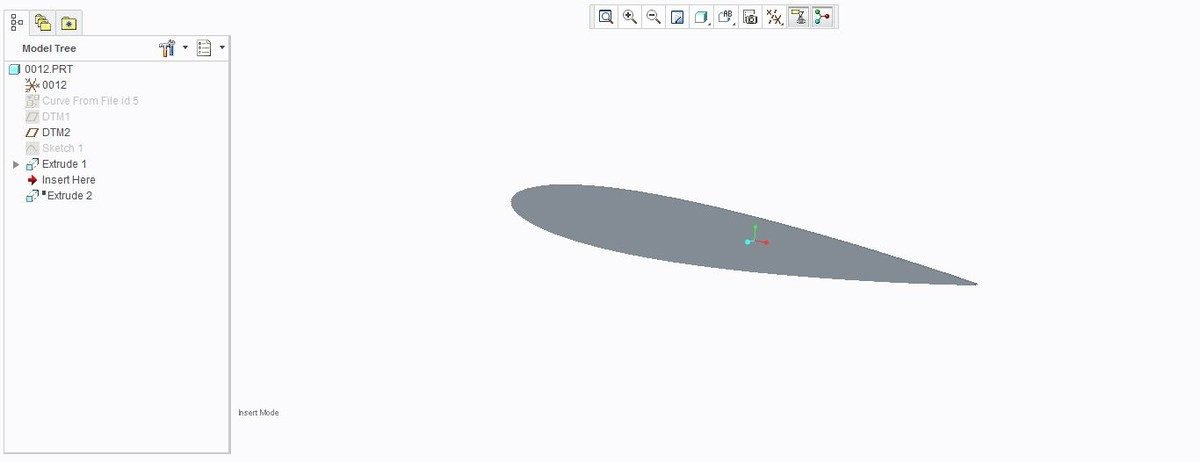
- Lift and drag of NACA 0012 vs NACA 2412 vs NACA 4412 – see how camber changes lift and stall angle.
- Effect of Reynolds number on airfoil performance – important for drones and small UAVs that fly at low speed.
- Rectangular vs tapered vs swept wing – compare lift distribution, induced drag and stall behaviour.
- Winglet design (blended, raked, split-tip) – reduce induced drag from wing-tip vortices.
- Gurney flap on a low-speed airfoil – a small tab at the trailing edge that increases lift.
- Slotted flap and slat high-lift study – how airliners generate extra lift during take-off and landing.
- Leading-edge tubercles inspired by the humpback whale – a bio-inspired idea for gentler stall.
- Morphing (flexible) wing concept – change camber in flight instead of using hinged flaps.
3. Drag Reduction and Flow Control Projects
- Vortex generators to delay flow separation – small vanes that energise the boundary layer.
- Dimpled surfaces (golf-ball effect) – how dimples reduce drag on bluff bodies.
- Riblets (shark-skin surface) – micro-grooves that reduce skin-friction drag.
- Boundary layer suction or blowing – an advanced flow-control study for final year or M.Tech.
- Synthetic jet actuator concept – active flow control without an external air supply.
4. Vehicle and Ground Aerodynamics Projects
- Car body drag with and without a rear spoiler – measure the change in drag and downforce.
- Truck and trailer gap fairing – reduce fuel use of heavy vehicles.
- Motorbike fairing and rider position – how a rider’s posture changes drag.
- Formula-style front wing and diffuser – downforce generation close to the ground.
- Bicycle helmet aerodynamics – compare helmet shapes for drag.
- Building and wind-load study – flow around tall buildings and pressure on facades.
5. High-Speed and Rocket Aerodynamics Projects
- Convergent–divergent (de Laval) nozzle – study choked flow, the exit Mach number and shock position.
- Rocket nose cone shapes (conical, ogive, parabolic, Haack) – compare drag at subsonic and supersonic speeds.
- Supersonic flow over a wedge and a cone – validate shock angles with oblique-shock theory.
- Supersonic air intake (ramp intake) – shock-wave pattern and pressure recovery.
- Model rocket fin design and stability – centre of pressure vs centre of gravity.
- Re-entry capsule blunt-body shape – why blunt shapes are used for heat-shield design.
6. Rotor, Propeller and Turbine Aerodynamics Projects
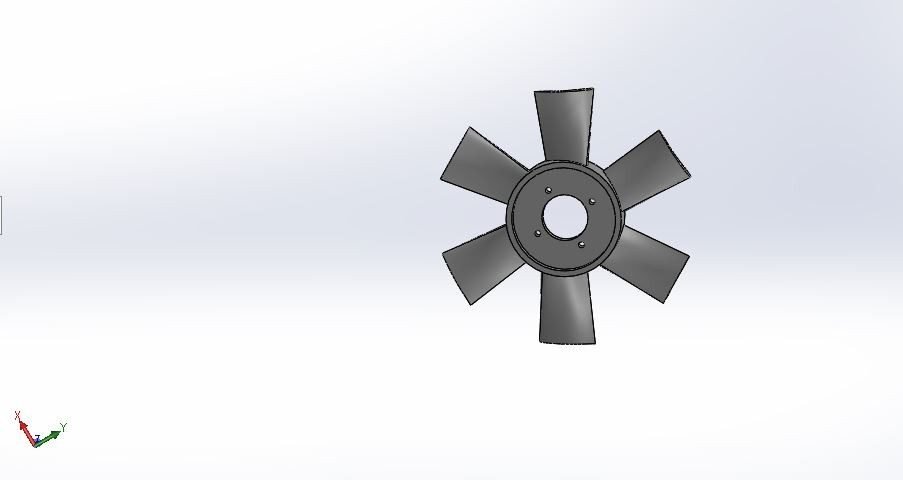
- Drone propeller blade design – thrust vs RPM for different pitch and twist.
- Helicopter rotor blade airfoil study – lift and moment of rotor airfoils.
- Small horizontal-axis wind turbine blade – blade element momentum (BEM) design in Python.
- Vertical-axis wind turbine (Darrieus / Savonius) blade – compare airfoil sections and power coefficient.
- Ducted fan vs open propeller – how a duct changes thrust.
7. Python and Calculation-Based Aerodynamics Projects
- Thin airfoil theory calculator – lift coefficient of a cambered airfoil from its camber line.
- Vortex panel method code – pressure distribution around any airfoil – a strong final year coding project.
- Lifting-line theory for finite wings – induced drag and span efficiency of different planforms.
- International Standard Atmosphere (ISA) calculator – temperature, pressure and density vs altitude.
- Drag polar and best glide speed calculator – find L/D max for a light aircraft or glider.
See ready-to-run code for several of these in our aeronautical mini projects with Python source code.
Aerodynamics Projects from Our Library
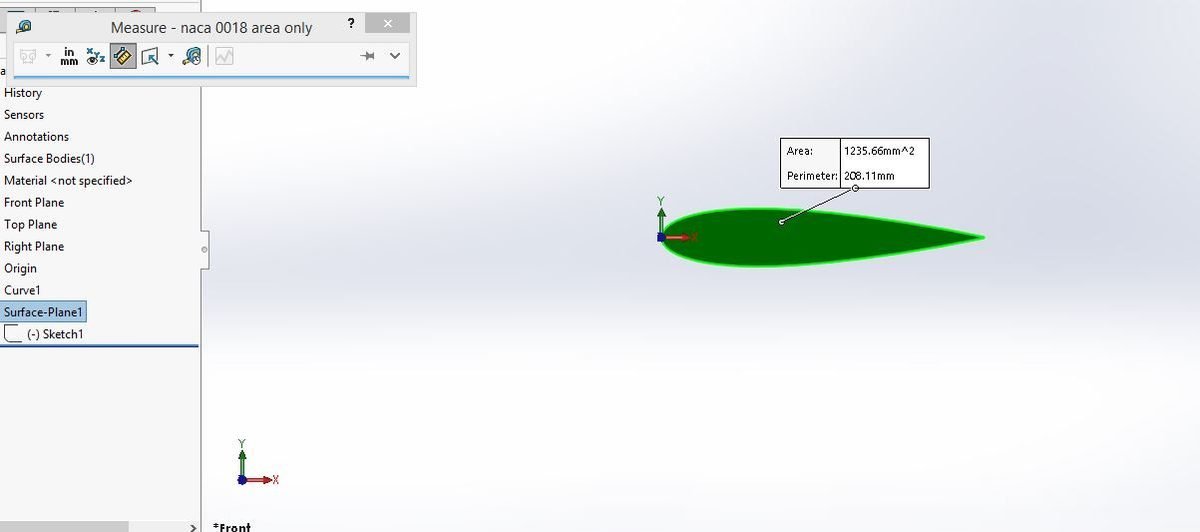
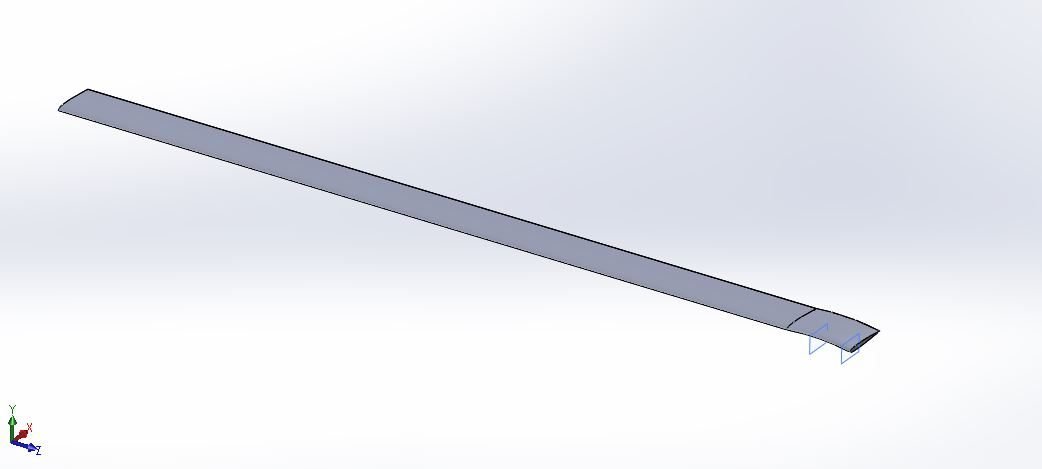
These design-and-analysis projects are already in our library. Open any one to see the model and what was studied.

How to Make Your Aerodynamics Project Stronger
- Start with a reference case. Use a NACA 0012 or NACA 2412 airfoil so you can compare your results with published wind-tunnel data.
- Change one thing at a time. Angle of attack, shape, speed or surface – one variable per study keeps your conclusions clear.
- Do a mesh-independence study in CFD and show that results do not change when the mesh is refined.
- Validate. Compare lift-curve slope with thin airfoil theory (about 2π per radian) or shock angles with oblique-shock relations.
- Explain the physics. Every graph needs a “why” – separation, vortices, shocks or boundary layer behaviour.
Revise the theory with our free aerodynamics notes and formulas and prepare with aerodynamics viva questions.
More Aero Project Ideas
- Aeronautical engineering projects for final year students
- Aviation and aerospace projects for students
- Aeronautical mini projects with source code
- Aircraft design project report (free PDF)
- CFD projects for engineering students
Need Guidance With Your Project?
We guide and support your work – from choosing the topic and planning the method to explaining each step in live screen-share classes or recorded videos, so you do the modelling, analysis and writing yourself with confidence. Message us on WhatsApp or use the contact form on our home page and tell us your branch, year and the idea you like.
Frequently Asked Questions
What are good aerodynamics projects for students?
Good aerodynamics projects include a NACA airfoil lift and drag study, a low-cost wind tunnel, winglet design for induced-drag reduction, vortex generators for stall delay, car body drag reduction, rocket nose cone comparison and a convergent–divergent nozzle study.
Which aerodynamics project is easy for beginners?
A smoke-flow visualisation box, a balsa glider study, a Bernoulli venturi rig or a Python NACA airfoil plotter are easy beginner projects. They need little money and clearly show one aerodynamic principle.
Can I do an aerodynamics project without a wind tunnel?
Yes. CFD simulation or a Python-based method such as thin airfoil theory, a panel method or lifting-line theory can be used. Validate your results with published wind-tunnel data or theory.
How do I validate an aerodynamics CFD project?
Run a mesh-independence study first, then compare your lift and drag coefficients with published wind-tunnel data for the same airfoil and Reynolds number, or compare lift-curve slope with thin airfoil theory.
What is a good aerodynamics project for a final year?
Winglet design, vortex generators, leading-edge tubercles, a slotted flap high-lift system, a supersonic intake or a vortex panel method code are strong final year topics because they combine theory, simulation and validation.
Which airfoil should I use for my project?
NACA 0012 (symmetric) and NACA 2412 or 4412 (cambered) are the most common choices because a lot of published data is available for comparison.
Studying abroad? We guide you too – learn Python and engineering through our live classes or recorded video lessons.